| Part 1 The Theory of Faith | Hirohumi Hoshika |
Chapter 3 Establishment of the Apostolic Faith (6)
Proposition 1-Argument Christianity Proposition 1: ResurrectionPrinciple of the establishment of the Apostles' Faith:― "Restoration of Known Truth" Type
The following is the kerygma passage indicated by M. Dibelius and C.H. Dodd, contemporary New Testament scholars of Bultmann:
(Dibelius) Acts 2:23-, 3:13-, 10:37-, 13:23-
(Dodd) Acts 2:14-36, 2:38-39, 3:12-26, 4:8-12, 10:34-43
As Käsemann points out, kerygma is diverse and can be found scattered throughout the Epistles (1 Cor. 15:1-5, Phil. 2:6, etc.),
In contrast, the kerygma mentioned above is something that Peter and Paul (Paul only in chapter 13) spoke of when they were preaching to unbelievers (though they were Jews). Since Bultmann's emphasis is on the establishment of faith through a subjective decision, it can be understood that the kerygma as a mission to non-Christians was the subject of his consideration.
So, what is said in this "Apostle Kerygma"? Looking at the beginning, Acts 2:14-36, we can see that it mainly consists of two contents.
2:14-21 Pentecost as the fulfillment of the prophecy of the prophet Joel
2:22-24 Testimonies about the actions and resurrection of Jesus
2:25-31 The resurrection of Jesus as the fulfillment of the Psalms of the prophet David
2:32-33 The testimony of Jesus' resurrection and the explanation of Pentecost based on it
2:34-35 Explanation of the resurrection according to David's prophecy
2:36-37 Appeal to non-believers
This kerygma alternates between prophecy and testimony, repeating the pattern of Old Testament prophecy — Testimony about Jesus — Old Testament prophecy — Testimony about Jesus — Old Testament prophecy. In fact, the kerygma consists of these two elements: "the fulfillment of Old Testament prophecy" and "the testimony about Jesus," and this is the same for the kerygmas of other apostles.
3:12-17 Testimonies and claims about Jesus
3:18-26 Fulfillment of prophecies by Moses, Samuel, and the Holy Prophets
10:34-42 Testimonies and claims about Jesus
10:43 Testimony by the prophets
While it is already well known that all kerygmas share structural similarities,
While the content of the Old Testament prophecy fulfillment sections varies depending on the context of the sermon, the testimony about Jesus remains fixed. In other words, while the author attempts to prove Jesus’ divinity through numerous Old Testament prophecies, conversely, this means that these various Old Testament passages are being selectively and interchangeably used as proof that Jesus was sent by the God of the Old Testament.
That is to say, in the Apostolic Kerygma, the emphasis is not on the fulfillment of individual Old Testament prophecies, but rather on the testimony concerning Jesus, with references to Old Testament prophecies being secondary. In fact, the kerygma in Acts 10:34–43 contains only one verse of Old Testament prophecy.
Therefore, it can be said that the core of the kerygma is the section that refers to Jesus, but what exactly is the apostle trying to say there?
I would like to point out that there is one notable feature common to all kerygmas. To confirm this, I will quote the entire central section below.
2:22-24(By Peter)
Men Israelites, listen to this: Jesus of Nazareth was a man accredited by God to you by miracles, wonders and signs, which God did among you through him, as you yourselves know. This man was handed over to you by God's set purpose and foreknowledge; and you, with the help of wicked men, put him to death by nailing him to the cross. (But) God raised him from the dead, freeing him from the agony of death, because it was impossible for death to keep its hold on him.
3:13-15(By Peter)
The God of Abraham, Isaac and Jacob, the God of our fathers, has glorified his servant Jesus. You handed him over to be killed, and you disowned him before Pilate, though he had decided to let him go. You disowned the Holy and Righteous One and asked that a murderer be released to you. You killed the author of life, (but) God raised him from the dead. We are witnesses of this.
4:10(By Peter)
then know this, you and everyone else in Israel: It is by the name of Jesus Christ of Nazareth, whom you crucified (but) whom God raised from the dead, that this man stands before you completely healed.
10:37-41(By Peter)
You know what has happened throughout Judea, beginning in Galilee after the baptism that John preached how God anointed Jesus of Nazareth with the Holy Spirit and power, and how he went around doing good and healing all who were under the power of the devil, because God was with him. We are witnesses of everything he did in the country of the Jews and in Jerusalem. They killed him by hanging him on a tree, (but) God raised him from the dead on the third day and caused him to be seen. He was not seen by all the people, but by witnesses whom God had already chosen — by us who ate and drank with him after he rose from the dead.
13:27-31(By Paul)
The people of Jerusalem and their rulers did not recognize Jesus, yet in condemning him they fulfilled the words of the prophets that are read every Sabbath. Though they found no proper ground for a death sentence, they asked Pilate to have him executed. When they had carried out all that was written about him, they took him down from the tree and laid him in a tomb. But God raised him from the dead, and for many days he was seen by those who had traveled with him from Galilee to Jerusalem. They are now his witnesses to our people.
When we examine these references to Jesus, we can see that the same fractal (self-similar) structure that we observed when we previously considered the kerygma as a whole, exists within it.
That is to say, there are various descriptions of Jesus' actions during his lifetime and after his resurrection, and even the claim that the apostles themselves were witnesses to Jesus' resurrection, which seems to be of great importance, is mentioned inconsistently; for example, it is placed away (verse 32) from the middle of topic in chapter 2 and is omitted in the short kerygma of chapter 4.
Therefore, extending the above idea, it can be said that these actions of Jesus during his lifetime and after his resurrection are parts that can be replaced with various other words. In contrast, the following section is the only part that is consistently stated throughout the above.
"You killed Jesus." But "God raised Jesus."
Moreover, in Peter's kerygma, these two phrases are always closely related and are stated consecutively without any pause. In Paul's kerygma, other words are inserted between them, but the connection between the two is emphasized by the word "But (δε)" transcending those other words.
From this, we can see that the core of the apostolic kerygma is, "You killed Jesus. This Jesus God raised up." The consistent use of fixed language in missionary work, even when presented in different settings, suggests that this was the central and indispensable point of the mission.
Moreover, this is not derived from arbitrary interpretation or special "reading" of the kerygma, but rather, as seen above, it is considered mechanically from the form of the kerygma, leaving no room for any other judgment. The fact that this particular section is preserved in exactly the same form in all kerygmas — which is remarkable in itself — is evidence that this was precisely where the most striking feature of the kerygma lay.
So, what exactly were the apostles, especially Peter, trying to convey through this?
"You killed Jesus, but God raised Jesus up."
Beyond this point, this is a matter of interpretation, but the meaning of this statement is clear and does not require any special interpretation.
This statement, of course, does not assert the paradox that Bultmann claims. That is, it is clear that the main aim is not to present a paradoxical claim about Jesus' life and death, such as "Jesus died, but he is still alive," or a paradoxical Christology of the humanity and divinity in Jesus, such as "Jesus of Nazareth is the Christ of God."
Here, two states of Jesus are not being contrasted, but rather two judgments that were passed upon him. And the meaning of the difference in those judgments is being conveyed home to the people.
"You deemed Jesus deserving of execution, but God regarded him as worthy of being resurrected."
This is what Peter wanted to tell the people.
――You did not believe in Jesus, and I, too, lacked conviction about Jesus while he was still alive, so I let him be crucified. I approved the crowd's sentence of crucifixion. But that was wrong. Because he was resurrected. I am a witness to that. Is there any other way to understand Jesus' resurrection than that God deemed him worthy of being resurrected?――
This is roughly what Peter must have said. Why did Peter say this?
It was because he was given confidence in Jesus by this. Peter believed in Jesus through this understanding of the resurrection, and he thought that by explaining to others the reasons for his belief in Jesus, they too could come to believe in Jesus. Therefore, kerygma reveals the reasons for the establishment of the apostles' faith, and is not a "teaching" but a "testimony".
This is not the place to explain orthodox doctrine, but the above interpretation of kerygma is the very essence of the doctrine of resurrection. It is one of the things that has been understood to be the "meaning of resurrection" and it is a doctrine that should be given priority over interpretations of the resurrection as "conquering death" (Rom. 8:11), "the first fruits of the resurrection in the end times" (1 Cor. 15:20), or "the new birth of sinners" (1 Pet. 1:3).
Therefore, this interpretation of the kerygma reaffirms the orthodox doctrine of the resurrection and contains nothing new. However, it is important that it does not go beyond the realm of orthodox doctrine. It is something that many people, including Bultmann, have already done to go beyond the realm of orthodoxy to resolve the issue of "historical facts and faith".
Now, what does this understanding of kerygma, derived from the facts of the biblical text, lead to regarding the issue of "historical facts and faith"? Let's summarize below.
Firstly, it provides a complete answer to the historical fact and faith problem that Bultmann raised and the Bultmann school attempted to answer: namely, the problem of discontinuity and continuity between the historical Jesus and the apostle kerygma.
Bultmann questioned why the Bible contained two different teachings, because he viewed the apostle's ministry as a "teaching" on par with Jesus' preaching. However, the apostle kerygma was not presented as a “teaching,” that is, not as something to “believe and accept,” but rather as a disclosure of the basis for accepting what Jesus said as true. Therefore, it means that the teachings of the New Testament are essentially limited to the single teaching of Jesus, and the apostle kerygma presents as a testimony, from the perspective of those who accepted them, of how they came to believe in Jesus’ teachings.
It can be said that for the disciples, the more lofty teachings Jesus preached — or the more he spoke of things that were difficult to grasp at first — the higher the barrier to believing in him became. This is because it requires them to believe in Jesus not merely as a teacher or prophet, but as something more. The scene in which Peter "rebukes" Jesus (Mk. 8:32) takes place against the backdrop of this confusion.
Furthermore, the fact that kerygma is not a "teaching" reveals the secret behind the reversal of Jesus' position; namely, since the reason for believing in Jesus was explained, Jesus became "the one who is proclaimed".
When a “testimony” is being shared, this is only natural; in a “testimony,” the main focus is on how one came to believe, while the object of that belief is secondary. The reason Jesus appears to shift from being the "proclaimer" to the "one proclaimed" in the apostole kerygma is that the kerygma is a "testimony", and therefore its focus is not on Jesus himself but on "the reasons for believing in Jesus". That does not overturn the position of "Jesus the Missionary".
Secondly, the above understanding of kerygma also provides the answer to the question of the origin of the "absoluteness of faith"—or, in other words, "certainty of faith"—that Bultmann sought to preserve. Furthermore, the correctness of the belief that faith does not arise merely from historical facts, a belief that has been sought after since M. Köhler, as discussed in Chapter 2-Easy Study 3, is also guaranteed by the above understanding of kerygma. It may be a bit lengthy, but what follows is a reflection on the formation of “conviction” within the Christian faith.
While Peter's resurrection kerygma is first mentioned at Pentecost (Acts 2), it would be inaccurate to understand that he received this Christological kerygma through the "Descent of the Holy Spirit" on the day of Pentecost. The account in Acts chapter 2 gives the impression that Peter and the other apostles were already fully prepared and confident in Jesus on the day of Pentecost.
This is because, as confirmed in the examination of the kerygma, this initial kerygma at Pentecost is logically coherent and, moreover, has the same structure as the kerygmas that are repeated later. This suggests that some time had passed since the apostles acquired the content of the kerygma, and that during that time their understanding of the kerygma had become more organized. The appearance of the clarity of this apostle kerygma is the complete opposite of the confusion caused by the speaking in "tongues" resulting from Pentecost, as described in the same passage.
Therefore, it is appropriate to understand the Christological kerygma that Peter became convinced of not as a mystical revelation brought about by the Holy Spirit, but as a normal, rational understanding of a proposition. So, what forces were at work in Peter's mind when he arrived at the interpretation of the resurrection as a Christological kerygma? Why did Peter consider this interpretation correct, and why did it become the firm conviction of his faith?
The resurrection of Jesus can be considered to have had two primary effects on his disciples. One was the joy that people experienced from Jesus' resurrection, similar to what people experienced with the resurrection of Lazarus (Jn. 11). However, it can be thought that another process unfolded within them over time. It is a "logical-psychological" process, rather than an "emotional-psychological" one like in the case of Lazarus.
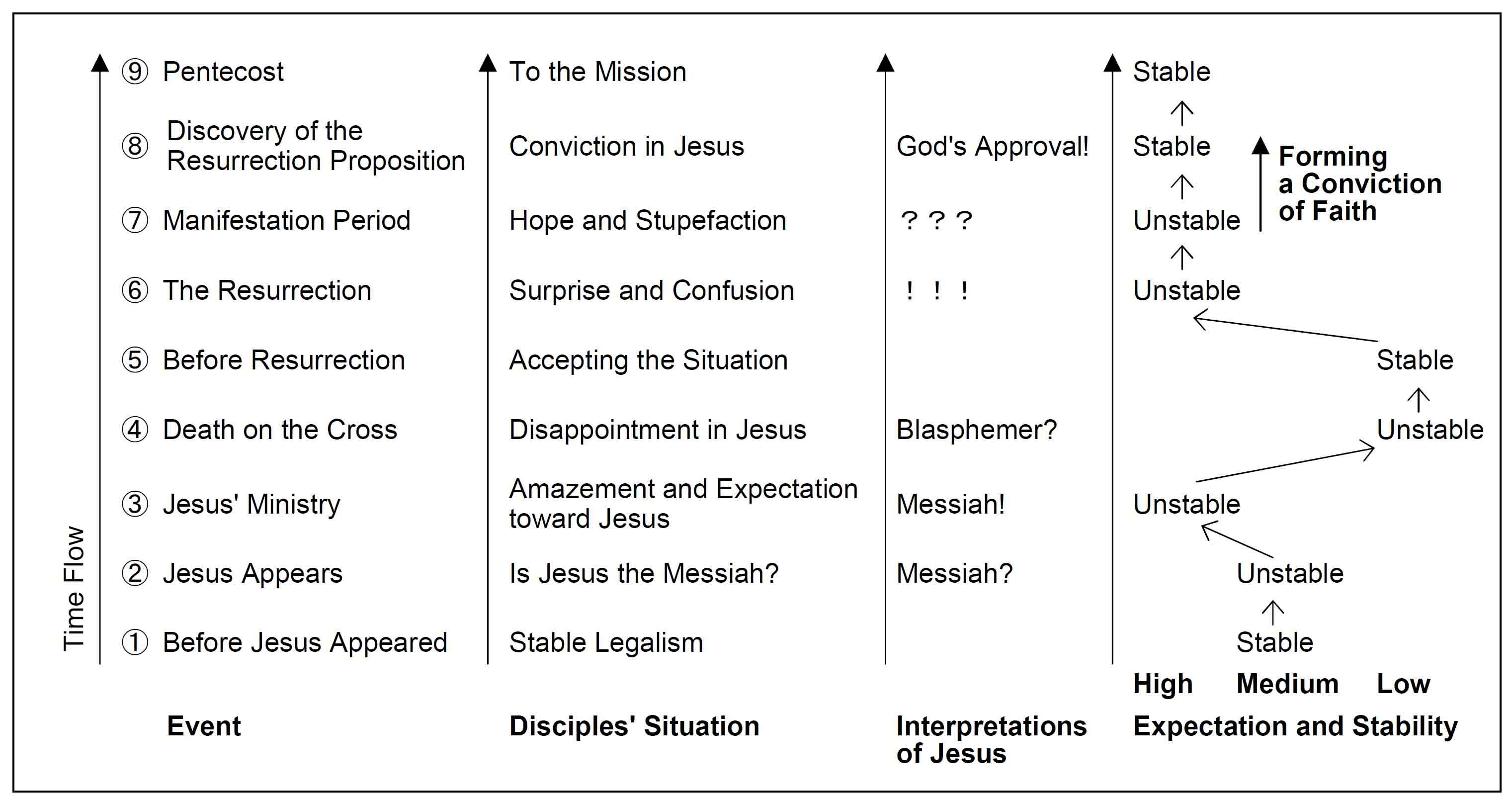
Fig. 1 Two Psychological Indicators of the Disciples Before and After Jesus' Resurrection
|
The first indicator is the emotional-psychological indicator, which is shown in the diagram as High, Medium, and Low levels of "Expectation". The nuance is that disciples rejoice when expectations are "high" and grieve when they are "low". Expectations are high during events such as Jesus' appearance and resurrection.
The second indicator is the logical-psychological indicator, which is shown as Stable or Unstable.This indicates the state of consistency of the disciples' worldview, and "Unstable" refers to a state where that consistency is broken. When Jesus appeared and at the time of his death and resurrection, the peace of mind the disciples had was shaken each time.
Combining these two indicators shows that, at the time of Jesus' ministry, their beliefs were in a state of "instability" but with "high expectations"; immediately after his death on the cross, they were in a state of "instability" with "low expectations"; and once they had accepted Jesus' death, they were in a state of "stability" with "low expectations".
Here, among the patterns of emotional transitions among the disciples, the transition from a state of disrupted coherence to restoration, that is, the "Unstable → Stable" transition pattern, is important. This transition was realized in a state of "High expectation" through the discovery of the "Resurrection Proposition", and this formed the apostles' new faith. |
Peter's impression of Jesus during his lifetime was one of strong divine presence. His death on the cross negated that impression, but his resurrection restored it.
However, the psychological recovery brought about by the mere fact of Jesus resurrection remained emotional and did not possess the power to completely transform him. In fact, it appears that after Jesus' resurrection, Peter and the other disciples returned to Galilee and intended to resume their former professional lives.(Jn. 21:3)
For the apostle to reach a firm conviction of faith, understanding the resurrection was more important than the fact itself. When Peter cognized the "Resurrection Proposition", that is, "the Jesus we served was killed by men, but God called him to resurrection, and now God testifies that Jesus is the Christ", he became convinced that ――Jesus was indeed right and our impression of him was not wrong――, and his former belief was restored.
Even during Jesus' lifetime, Peter had already formed a correct impression of Jesus through his confession of Christ (Mark 8:29). For Peter, the truth that “Jesus is the Christ” had been established in the past, but it was shattered by Jesus’ death on the cross, leaving his mind in a state of anxiety and doubt. However, the understanding of the resurrection as "God's approval of Jesus" restored the old truth.
In other words, the lost truth is restored, and faith is formed at the moment of that restoration.Here, the power by which truth seeks to reclaim itself is the force that establishes faith. The coherence of the beliefs gained through this restoration provides certainty regarding the correctness of that understanding, and this forms the universality of faith.
While the emotional joy brought about by Jesus' resurrection actually affects only those who have a positive relationship with Jesus, the attainment of consistency in faith also affects those who have a negative relationship with him――as it is written that when the people heard the apostles' preaching, "they were cut to the heart" (Acts 2:37)――and thus became a force that prompted them to repent.
Therefore, the understanding of the resurrection found in the apostles' kerygma gave the disciples confidence in their faith. This confidence in their faith is their faith, and it is the "Apostolic Faith" that has been handed down to us.
In this part of conviction, we can see the robustness of a faith that can be called "universal" and not derived from an object of faith. This is the true meaning of "historical facts do not give faith". That is, Jesus gives faith, but it is basically a "spontaneous faith" that is based on the principle that "historical facts give faith". However, the faith that exceeds the faith given by the historical facts of Jesus, comes from the confidence in Jesus brought about by the resurrection proposition.
On the other hand, among those who view Jesus as an enemy, a state of "spontaneous faith", arising from a favorable view of Jesus or from his influence, naturally does not exist. For this reason, the conversion of Saul (later Paul), as recorded in Acts 9, is characterized as a dramatic reversal from disbelief to conviction.
Therefore, it should be understood that there are generally few examples of conversion that do not go through a "spontaneous faith" process, that is, conversions that are based on a negative relationship with Jesus, but even today, many believers tend to testify to their own conversion as a dramatic event. However, this was modeled after the conversion of the adversary, Saul, and this kind of misinterpretation can also be seen in Bultmann's and others' understanding of the origin of faith, which will be discussed below.
Bultmann's framing of the apostles' changing faith as a mystery was extremely important. However, it can be described both Bultmann and the Bultmannian school misinterpreted the kerygma and also misjudged the changes in faith.
This was because, under the influence of Kantian philosophy, they denied the divine events surrounding Jesus during his lifetime. Bultmann and others argue that Jesus could not have been divine during his lifetime, and therefore those around him simply held him in a respectful faith, but later, suddenly, a divine faith in Jesus spread among the apostles. For this reason, the fact that the apostles had come to possess a "faith that went beyond historical fact" seemed to them like an extremely significant event that could not be explained by logic.
However, considering that faith generally involves believing in things beyond what is visible from the outset, it is not unnatural that the people around Jesus perceived him as a godlike being, as described in the Gospels. Wherein, the question is follows: If the apostles of the Gospel era already held a divine faith in Jesus, what, then, constituted the subsequent change in their faith? As seen above, it was a faith that believes in more than what is visible to which further certainty was added; it was precisely the process of acquiring this certainty that had to be set as the mystery to be solved.
In this respect, Bultmann and the Bultmann's school failed to grasp the content of the apostles' transformation. The difference between the two lies in the fact that Bultmann views kerygma as "questions for receiving Jesus' teachings in a meaningful way," thereby maintaining a disconnect between Jesus' doctrines and kerygma, while the Bultmann's school gives continuity to them by considering kerygma as "a continuation of the way of life that Jesus teaches". However, all of these solutions are based on the same mistake: they assume that the historical Jesus is less significant than the Jesus described in the Gospels, and then use the question of "why did the apostles have a faith greater than that of the historical Jesus?" as the starting point for the kerygma problem.
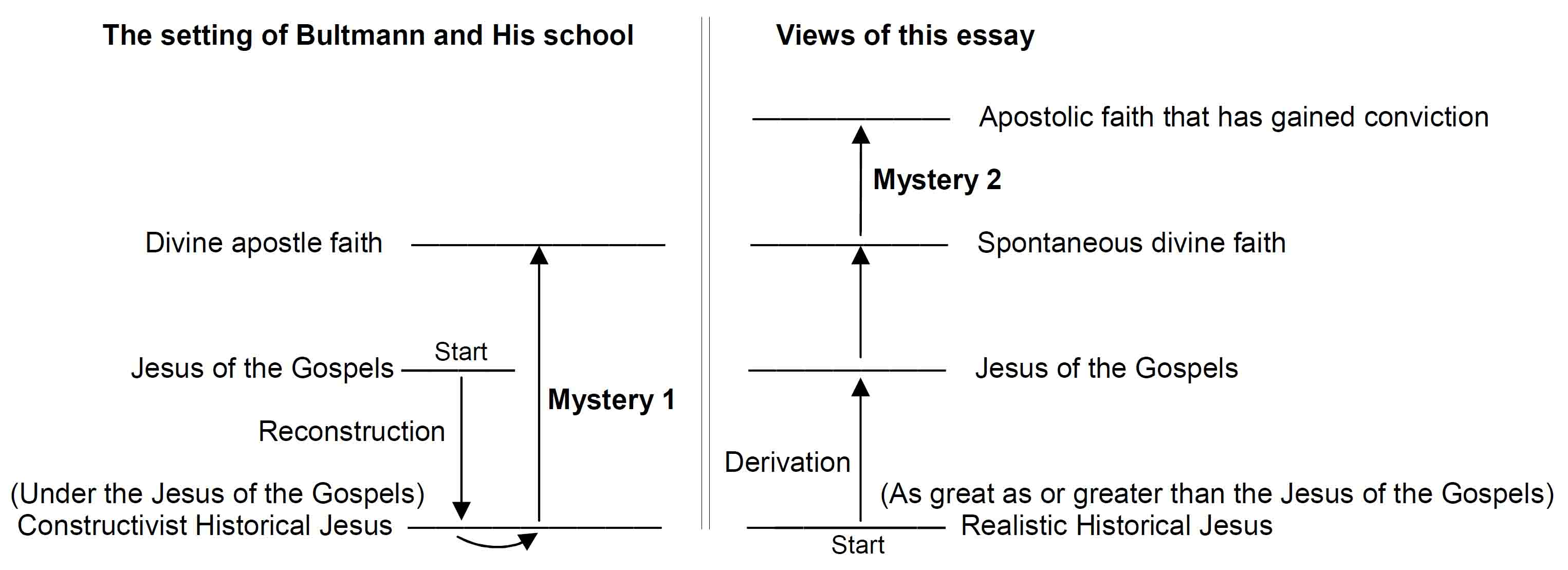
Fig. 2 The gap between historical fact and faith
|
※Bultmann and the Bultmann's school mistakenly identified Mystery No. 1 instead of the original Mystery No. 2 as the gap of the leap of faith that needed to be solved. They view the Mystery No. 1, "Divine apostole faith," as "a faith that goes beyond the faith that naturally follows from the historical fact that Jesus did not perform miracles," but in this essay, we view the Mystery No. 2, "Apostolic faith that has gained conviction," as "a faith that goes beyond the faith that naturally follows from the historical fact that Jesus performed miracles." ※In modern mainline theology, "Paulian theology" is placed in the position of "Divine apostole faith" in the diagram above, and many studies discuss Mystery No. 1 as "Why did the theology of the redemption cross arise from Jesus, the teacher who taught the Kingdom of God?", but the structure of the problem setting is inherited from the diagram above. In this case, the answer naturally lies in Paul's own conversion, leading to the conclusion that the dramatic events Paul encountered, as recounted in Acts chapter 9, triggered his reinterpretation of the Old Testament and a reversal of his assessment of Jesus. While that understanding of the formation of Saul's faith as a persecutor is certainly valid, it is not the mystery of the early church that needs to be solved. What needs to be solved is not the formation of Paul's faith, but Peter's. And the answer lies not in the reversal of belief, but in the restoration of belief. ※For more information on "Constructivist Historical Jesus" and "Realistic Historical Jesus" in the diagram above, see the next chapter. (Chapter 4 - Consideration 3) |
At the end of this section, I would like to address the mistaken understanding that "Jesus' resurrection gave rise to a new faith among the apostles."
While it would certainly be an overstatement to label this understanding "incorrect" at this point――given that, to the best of my knowledge, every church teaches it this way――strictly speaking, it is indeed incorrect. This becomes clear when considering the following point.
That is to say, if the miracle of Jesus' resurrection renewed the apostles' faith, then that renewed faith is of the same nature as — and constitutes a continuation of — the faith they held in Jesus based on the miracles of the Gospel era; for in both cases, the faith is grounded in miracles.
In that case, it would follow that the reason they failed to possess a firm faith during the time of the Gospels was simply that the miracles performed by Jesus during his lifetime lacked sufficient greatness. This implies that, while the apostles failed to attain firm faith because the miracles Jesus performed during his lifetime were insufficient for them, once shown the supreme miracle of the Resurrection, even they, in their dullness, were compelled to believe; such a view, however, would render the apostles' faith presumptuous.
If faith were obtained simply because Jesus demonstrated his death and resurrection, it should be called a "faith of works". Furthermore — and this is a matter of even greater significance — this perspective would also entail the problem of failing to properly evaluate the significance of the miracles performed by Jesus during his lifetime.
Therefore, it is accurate to understand that the apostles gained new faith not through Jesus' resurrection, but through the interpretation they had of Jesus' resurrection. It was not their rejoicing at Jesus' resurrection, but the fact that they gained an understanding of the outstanding existence of Jesus — who, in a sense, had troubled them and caused them suffering — that triggered a new faith in him.
I would also like to address a common misconception taught in the church: the idea that the setback of denying Jesus three times was what transformed Peter and led him to his apostolic mission. To say that this is “wrong” is clearly an overstatement; it is not wrong, but rather a result of a lack of understanding.
This understanding offers, in a sense, the finest interpretation of the Transfiguration of Peter. It is certainly literary in nature and possesses the power to appeal to people.
However, there is a problem with attempting to interpret the transformation of the apostle solely in terms of his inner emotional state. I believe this amounts to reducing the Bible to literature and opens the way to understanding Christianity as something entirely different.
This is because, when one attempts to view Peter’s transformation as a purely psychological phenomenon — or, in other words, to interpret the New Testament as a work of pure literature — one inevitably must come to regard the event of Jesus’s resurrection as something superfluous.
Regarding the Peter depicted in Chekhov's The Student — the Peter who slept "slovenly"
From a literary perspective, it seems preferable for a reincarnated person’s resolve to be underpinned by tragedy. However, the actual accounts in the New Testament convey that Jesus rose again, the disciples rejoiced, and Peter was given the opportunity to make three confessions of faith that cancelled out his three denials.
Thus, when they appeared before the people after Jesus’ ascension, they did not come across as a group of people filled with grim resolve, but rather as a group brimming with confidence — as if their former frailty had never existed — and with an air of audacity that seemed to deny their past selves.
In short, the accounts in the New Testament do not align with the conventions of literary narrative. Christianity is not literature; indeed, it possesses aspects that can be off-putting to a literary sensibility. Peter’s transformation contains elements that simply cannot be contained within such a literary framework. While his experiences had the potential to yield outstanding literary works, such as Chekhov’s novels, it must be recognized that they were not the source of his renewed faith.
Therefore, the change in the apostles’ faith was not merely [emotional-psychological]; it was accompanied by a [logical-psychological] change — namely, the attainment of coherence in their belief in Jesus.